Heat Pump vs. Central AC Replacement in Riverside
Heat pumps and central air conditioners provide similar cooling, but they handle heating very differently. This guide compares heat pumps with central air plus a gas furnace for Riverside homeowners, including operating costs, local climate, rebates, dual-fuel options, equipment lifespan, and when each system makes the most sense.
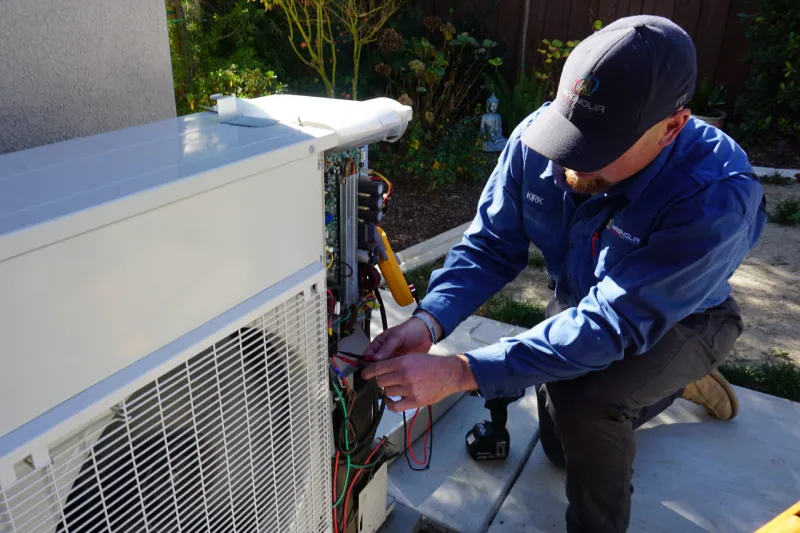
For most Riverside homes replacing a worn-out system, a heat pump wins the heat pump vs. central air decision: it cools like a central air conditioner, then heats the house through a winter with about four freezing nights a year. Central air still makes sense if you have a newer gas furnace worth keeping. Magnolia Heating, Cooling & Plumbing installs both.
Heat Pump vs. Central Air: What Is the Difference?
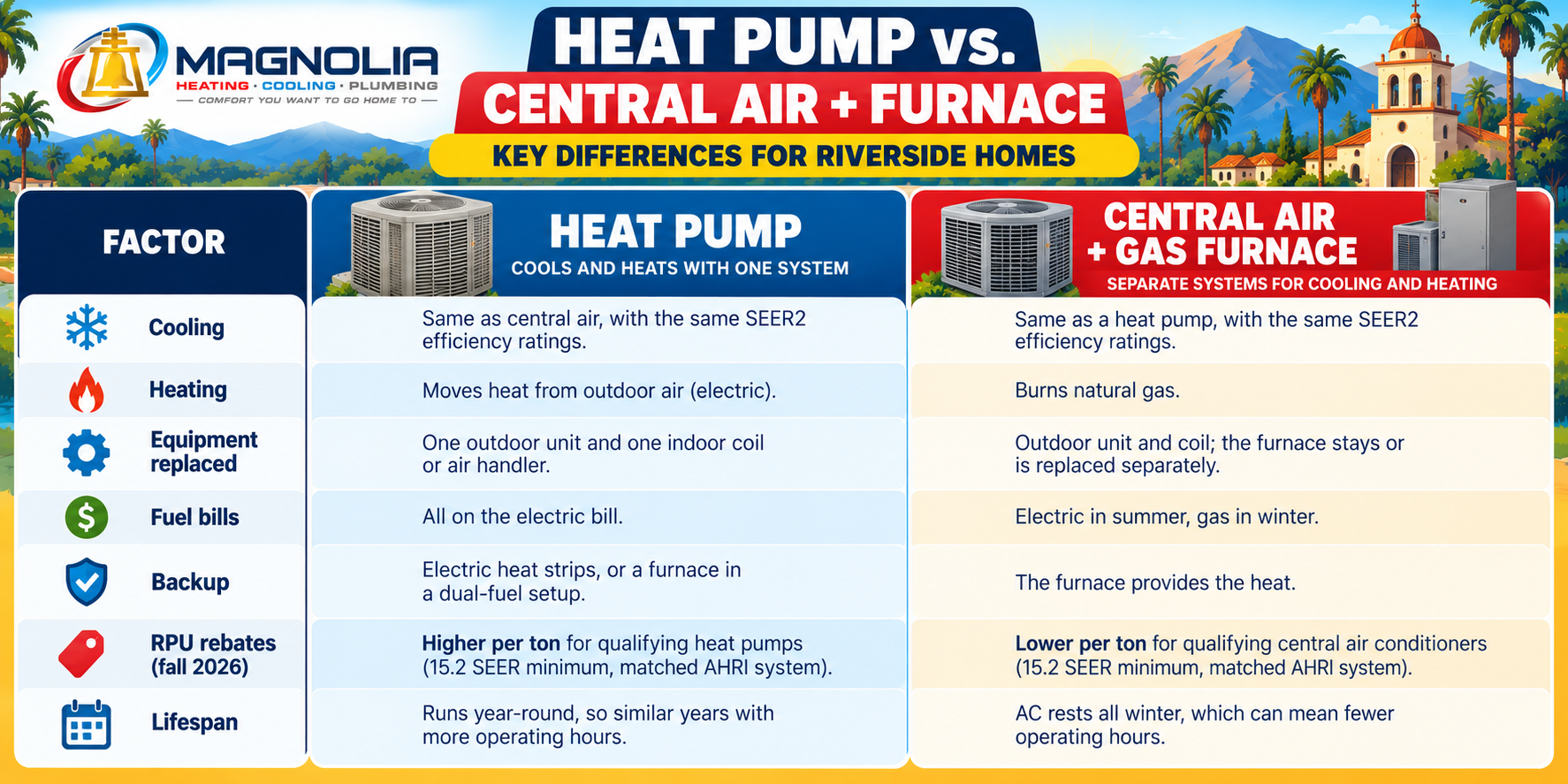
A heat pump is a central air conditioner that can run in reverse. In summer both systems do the same thing: refrigerant absorbs heat at the indoor coil and releases it at the outdoor unit. A heat pump adds a reversing valve, so in winter it pulls heat from the outdoor air and moves it inside. ENERGY STAR describes a ducted heat pump as "a central air conditioner that also works in reverse." Central air has no heating side, so it's paired with a furnace, which in Riverside usually burns natural gas.
Does a Heat Pump Work in Riverside Winters?
Yes, and Riverside is close to the ideal case. Air-source heat pumps lose efficiency as the outdoor air gets colder, which is why comparison pages written for cold-winter states hedge. Riverside's average January low is about 44°F, the city averages only about four nights a year at 32°F, and average daily highs stay above 50°F even in the coldest weeks.[8] A standard heat pump rarely needs its backup heat here, mostly for a few minutes during a defrost cycle or after a big thermostat setback. The equipment ENERGY STAR certifies for cold climates is tested down to 5°F, far below Riverside's coldest nights.[17]
Magnolia's own heat pump page calls it "an excellent choice for Southern California's mild climate."[7] What changes for homeowners is the feel of the heat. Furnace air leaves the vent hot; heat pump air leaves it warm and runs longer and steadier. People used to a furnace sometimes read that as a problem the first week. It isn't.
Which Costs Less to Run?
In summer, nothing changes: a heat pump and a central air conditioner of the same SEER2 rating cost the same to cool with. The difference is winter. A heat pump moves heat instead of making it, so DOE says heat pumps provide "up to three times more heat than the energy they use."[16] Against a gas furnace the answer depends on your RPU electric rate and your SoCalGas rate in the month you run it, and in Riverside the heating season is short enough that the winter bill is a small share of the year either way. The summer bill, which both systems share, is where efficiency ratings matter most. Magnolia's post on whether a heat pump will save you money covers the savings question.
Upfront, a heat pump usually costs more than an air conditioner alone, because you're buying a heating system too. Compare it with the price of an air conditioner plus the furnace you'd eventually replace, not the air conditioner by itself.
What Rebates Apply in Riverside Right Now?
Fewer than a year ago, and they favor the heat pump. As of this writing:
- Riverside Public Utilities rebates both new central air conditioners and heat pumps for its residential electric customers, with a higher per-ton rebate for heat pumps, a 15.2 SEER minimum, and the condenser and coil installed together as a matched pair listed with AHRI, the industry's ratings directory. Apply within 90 days with the dated receipt.[9]
- The federal energy efficient home improvement credit covers improvements made through December 31, 2025, so it does not apply to a 2026 installation.[18]
- California's state heat pump rebate program, HEEHRA, has its single-family rebates fully reserved statewide as of February 24, 2026.[19]
Ask Magnolia for the current list before you count on any of them, and ask Magnolia about financing if you want to spread the cost.
Can You Keep the Gas Furnace and Still Add a Heat Pump?
Yes. That setup is called dual fuel: a heat pump handles cooling and mild-weather heating, and the existing furnace takes over on the coldest nights. Carrier markets it as hybrid heat.[22] In Riverside the furnace would run a handful of nights a year, which makes dual fuel a reasonable path when the furnace is under ten years old and you don't want to replace it yet. When the furnace is also near the end, a single heat pump system is simpler to own and maintain.
Looking ahead, California's 2025 Energy Code expands heat pumps in newly built homes permitted from January 1, 2026, and the state air board is developing zero-emission standards for new space heaters, though they aren't final and existing furnaces can still be used and repaired.[20][21] None of that forces a replacement today. It does mean a heat pump is the direction the equipment market is heading.
Which Should You Choose?
Choose a heat pump if your furnace and air conditioner are both past ten years, if you want one system and one bill, or if the RPU rebate difference matters. Choose central air with your existing furnace if the furnace is newer and sound, or if your electrical panel can't support a heat pump without an upgrade. Either way, start with Magnolia's guide to the five signs it's time to replace your old system, and get a load calculation rather than a like-for-like swap. The right size matters more than the type.
Frequently Asked Questions
What is the 5,000 rule for replacing an AC or heat pump?
A rule of thumb: multiply the repair quote by the system's age in years, and if the result is over 5,000, replacement is usually the better spend. The same repair quote that clears the line on a 4-year-old system can cross it on a 12-year-old one. It's a guide, not a law.
How long does a heat pump last compared to an air conditioner?
About the same number of years, with more running hours, because a heat pump works in both seasons. Magnolia's heat pump page puts a well-maintained unit at 10 to 12 years on average, the same as a standard cooling system.[7] Annual maintenance is what gets a system to the long end of that range.
Is a heat pump better than a gas furnace in Riverside?
For the few weeks a year the heat runs, both keep the house warm. A heat pump avoids combustion, a flue and a carbon monoxide risk, and it replaces the air conditioner at the same time. A gas furnace delivers hotter air and costs less to buy on its own. The deciding factor is usually the age of the equipment you already have.
Do I need a new thermostat for a heat pump?
Usually yes. A heat pump thermostat manages the reversing valve and backup heat, and DOE advises against large temperature setbacks on a heat pump unless the thermostat is designed for one.[16] Make sure the right control is part of the installation quote.
Why do some contractors steer people away from heat pumps?
Usually familiarity. A company that installs mostly furnaces and air conditioners tends to quote what it knows, and older heat pumps earned a reputation in cold-winter states that doesn't apply to Riverside. Ask any contractor how many heat pumps they installed last year and whether they'll size it with a load calculation.
Talk Through Both Options With Magnolia
Magnolia Heating, Cooling & Plumbing installs and replaces heat pumps and central air conditioners across Riverside. Ask for an estimate on both so you can compare: request one online or call (951) 688-3524.
Save on Your Next Home Service
Keeping your home comfortable and running smoothly shouldn’t have to stretch your budget. Explore current specials from Magnolia Heating, Cooling & Plumbing and save on select heating, cooling, plumbing, and indoor air quality services. Check out our latest offers and schedule your service today.